Daily market commentary
The Launch Pad |
|
|
|
 |
| |
|
|
Today
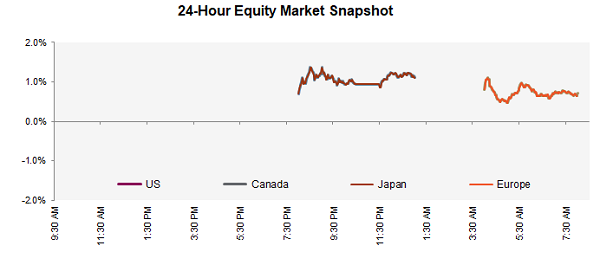
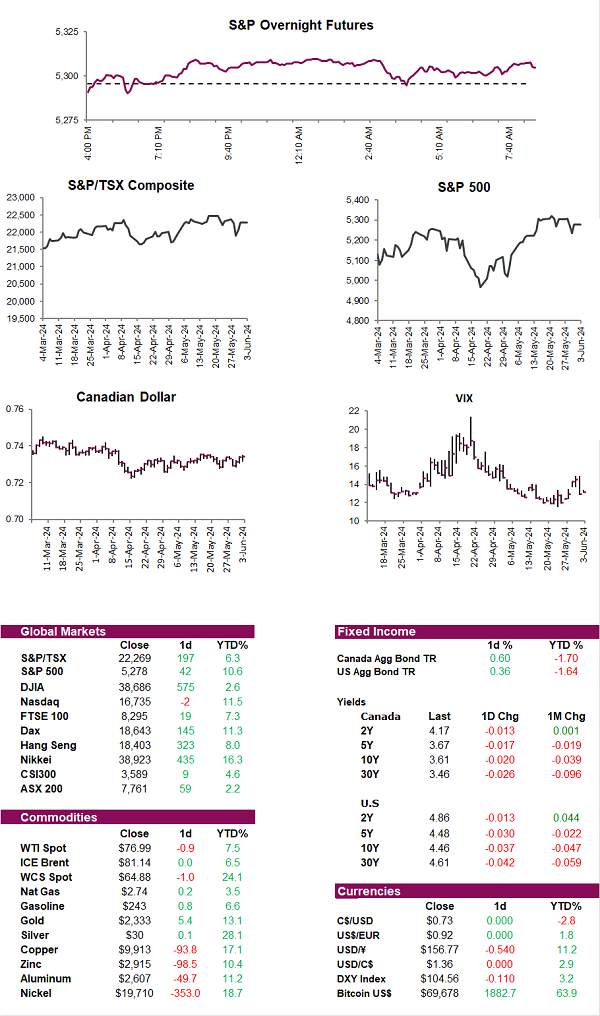
Stock futures rose slightly this morning as markets try to continue positive May performance momentum into June. Equity markets are coming off a strong May, with all major North American averages up for the month. All eyes will be on central banks this week, with the BoC and ECB set to announce their latest interest rate decisions. Both central banks are expected to cut interest rates by a quarter point, diverging from the Fed's policies. Although many are looking forward to the pivot (especially those with mortgages up for renewal), economists are noting that the divergence from the Fed will potentially weaken the Euro and Canadian dollar. This decision comes amid ongoing discussions about managing inflation risks and it appears that officials are prepared to tolerate a weaker currency if necessary.
On Friday we saw that Canada's economy experienced slower growth in the first quarter of 2024 than anticipated, with real GDP expanding by 1.7% at an annualized rate, below both economist and BoC expectations. The 0.4% quarterly growth was attributed to increased household spending on services, offset by sluggish inventory accumulations. March saw no growth, while April showed a 0.3% increase, primarily due to gains in manufacturing, mining, and quarrying. This data precedes an upcoming BoC interest rate announcement on Wednesday, with speculation rising about a potential rate cut, fueled by concerns over widening output gaps and weakening economic growth. Despite the disappointing headline figure, positive aspects include increased household spending and savings, alongside rising business investment in engineering structures, albeit tempered by widespread inventory slowdowns, particularly in the retail auto industry.
Recent economic data out of the U.S. is showing that the key drivers consumer spending are weakening, with real disposable incomes growing modestly over the past year, the savings rate at a 16-month low, and increasing reliance on credit. This decline in real spending, particularly in areas like cars and dining, is coupled with a cooling job market and higher sensitivity to prices, leading consumers to switch to cheaper brands. It’ clear that the Fed's efforts to manage inflation by maintaining high interest rates are beginning to show, as demand for workers decreases and wage growth slows. This can especially be seen from the recent dip in consumer spending and the downward revision of GDP growth estimates for the first quarter, indicating the U.S. economy is decelerating after outperforming expectations just last year.
In May, China's manufacturing sector saw strong growth, with the Caixin/S&P Global manufacturing PMI reaching its highest level in about two years at 51.7, driven by increased production and new orders, particularly among smaller firms. This positive outlook does however contrast with the official PMI survey, which showed a surprise decline in manufacturing activity, after the manufacturing PMI contracted to 49.5, breaking a two-month expansion streak, while the services sector PMI decelerating against expectations of faster growth. Despite challenges in the domestic market and the ongoing property crisis, China has implemented measures such as infrastructure investment and support for high-tech manufacturing to bolster the economy. However, the full impact of these policies has yet to be realized and the possibility of a resurgence in the China-U.S. trade war could further constrain China's exports. Forecasts for China's economic growth vary, with the IMF revising its projection for 2024 to 5%, while Moody's adjusted its forecast to 4.5%. The outlook for China's trade remains uncertain amid a sluggish global economy, although some respondents reported new export orders from trade fairs and expansions into overseas markets. Despite rising input costs, sentiment among producers improved, but employment remained weak, with job losses persisting for the ninth consecutive month, albeit at a slower rate.
The typical compensation package for CEOs in S&P 500 companies soared by nearly 13% last year, reaching a median of $16.3 million, while workers' wages and benefits rose by just 4.1%, exacerbating income inequality. At half the companies surveyed, it would take the median worker almost 200 years to earn what their CEO did. This surge in CEO pay reflects a desire among boards to reward and retain leaders, particularly in a post-pandemic market. Hock Tan of Broadcom led the survey with a pay package valued at about $162 million, fueled by stock awards and performance incentives tied to the company's market performance. Despite criticisms of widening pay gaps, shareholders typically support executive compensation plans, with companies receiving overwhelming approval in recent years. However, occasional rejections prompt companies like Netflix to reconsider their pay policies, highlighting the impact of shareholder feedback. We’ll see what happens with Musk’s pay package when shareholders vote on that later this month…
Despite China's pledge to streamline offshore listings over a year ago, companies face significant regulatory delays and lower valuations, even as market sentiment shows signs of improvement. Hopes for a revival were sparked by the country’s vow in April and strong IPOs like Zeekr's New York debut. Still, a restrictive regulatory environment and geopolitical tensions have created bottlenecks, delaying approvals and dampening IPO activities. At least $20 billion in Hong Kong IPO proposals are pending, with significant deals unlikely soon. The China Securities Regulatory Commission's new rules and inter-departmental scrutiny have extended approval times, impacting companies like JD Industrials and JD.com, causing concerns about valuations and investor demand amid China's economic slowdown.
Mama Mia! Tourism in Italy, especially in popular destinations like Lake Como and Milan, is becoming overwhelming, creating challenges for both locals and visitors. The influx of tourists has led to severe traffic congestion, making transportation difficult. Italy heavily relies on tourism, which contributed significantly to the economy post-Covid, but the sheer volume of visitors is straining infrastructure and resources. Cities like Venice have implemented measures such as charging entry fees to manage the crowds. Additionally, the hospitality sector is facing staff shortages, making it hard to cater to the growing number of tourists. While Italy remains relatively affordable in terms of food and local wines, high demand is making reservations and transportation challenging.
Diversion: $10 to any LP reader who can do this.
|
|
|
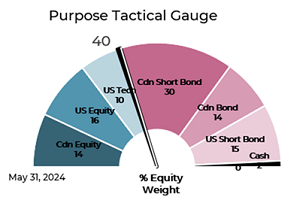
(% equity weight)
Our tactical fund is designed to complement your existing holdings to minimize portfolio volatility. To learn more, please click here.
|
|
|
| |
|
|
Company news
Nvidia’s CEO, Jensen Huang, announced plans to annually upgrade its AI accelerators, revealing the upcoming Blackwell Ultra chip for 2025 and a next-generation platform named Rubin for 2026. At the Computex trade show, Huang emphasized Nvidia's pivotal role in the generative AI revolution, highlighting substantial cost and energy savings with Nvidia’s technology. The Rubin AI platform will feature advanced HBM4 memory, aiming to address production bottlenecks. Nvidia also introduced tools and software models to enhance AI functionality in PCs and new server designs to accelerate market readiness. These initiatives underscore Nvidia's strategy to expand beyond major cloud-computing clients, targeting broader industry and governmental adoption of AI technologies.
Waste Management is nearing a deal to acquire Stericycle Inc. for about $7 billion, according to the Wall Street Journal. The announcement could come as early as Monday. Stericycle, a company based in Bannockburn, Illinois, specializes in the disposal of medical and hazardous waste from various institutions, including hospitals and military facilities. The company's shares closed at $51.54 on Friday, valuing it at almost $4.8 billion. Waste Management, based in Houston, is one of the largest waste haulers in the US. Neither company has yet commented on the potential acquisition.
Gamestop shares are on the move again and looking to nearly double after the Reddit account that drove the meme-stock mania of 2021 posted what appeared to be a $116 million position in the game retailer. The June 2 screenshot by Keith Gill, who goes by DeepF— Value on Reddit, shows five million shares bought at $21.27 apiece. It was the account’s first post in three years. The screenshot, which also included 120,000 call options worth $65.7 million due to expire on June 21, couldn’t be verified. The options would allow him to buy the stock at $20 a share.
|
|
|
|
Commodities
Oil prices are little changed after OPEC+ extended its production cuts to support the volatile oil market, despite concerns over the demand outlook and robust supply from outside of the group. Production cuts will continue in full in the third quarter, before being gradually phased out over the following 12 months, the Saudi Energy Ministry said Sunday after an OPEC+ meeting. The agreement extends voluntary cuts by key members like Saudi Arabia and Russia into next year, but starts to phase out these reductions earlier than anticipated. This move aims to balance the need to support crude prices, which have recently declined due to economic concerns in China and uncertain interest rate trends, with the desire to ease production constraints. The deal also extends the group-wide curbs to the end of 2025 and includes a 300,000 bpd increase in the UAE’s production target for next year. Some members have struggled with compliance, and the agreement includes provisions for them to improve adherence to their quotas. This decision reflects ongoing efforts to stabilize the oil market amid diverse economic pressures and geopolitical considerations.
European natural gas prices are hitting year-to-date highs after flows from Norway slumped, highlighting the risk of relying too much on one major supplier. Benchmark Dutch gas futures jumped more than 13% earlier today, the most this year. It’s not clear how long an unplanned outage will last at Norway’s massive Nyhamna gas processing plant. At the same time, Norwegian flows into the UK’s Easington terminal, an entry point for a third of Britain’s total supply, plunged to zero. The outages show the pivotal role Norway plays in supplying Europe after most Russian pipeline deliveries were halted following the invasion of Ukraine. Even after the energy crisis, the market remains very sensitive to supply issues and prices react quickly when there’s any deviation from the scheduled seasonal maintenance plans. 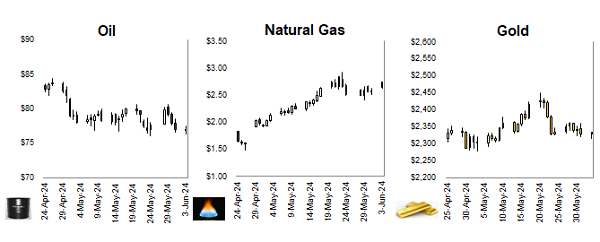 |
|
|
|
Fixed income and economics
Despite a minor drop in core PCE, suggesting inflation might be slowing, some strategists are cautioning that investors shouldn't be complacent. So why the pessimism? Well, Supercore PCE (which excludes housing services), rose 0.26% in April due to rising costs in financial services and insurance, keeping the y/y figure stubbornly high between 3.3% and 3.6% since November. This persistent inflation, coupled with slowing economic growth, means the Fed may have some more work cut out for it and may not cut rates soon. Experts are also warning that as prices remain high and disposable incomes fall, consumer pessimism may hurt earnings. And without political will for new fiscal spending, the economy won’t be able to rely on government support. Still, there are more economic reports the market will need see before getting a cleared picture on the current state of things, including upcoming ISM manufacturing and service sentiment indicators, which will offer insights into consumer economic outlooks.
Some analysts are noting that credit investors focusing solely on U.S. assets may be missing out, especially as the American economy slows and political risks rise. Despite the U.S.'s liquidity dominance, European and Asian credit markets are becoming a more popular destination for investors. Asian high-yield bonds, particularly in U.S. dollars, have outperformed significantly in recent months, and investors are noting that with the ECB poised to cut rates sooner than the Fed, this will benefit European investment-grade bonds. And while Emerging markets like Mexico and Brazil also present high-return opportunities, investors are often drawn to familiar and liquid U.S. assets despite their current overvaluation.
|
|
|
|
Chart of the day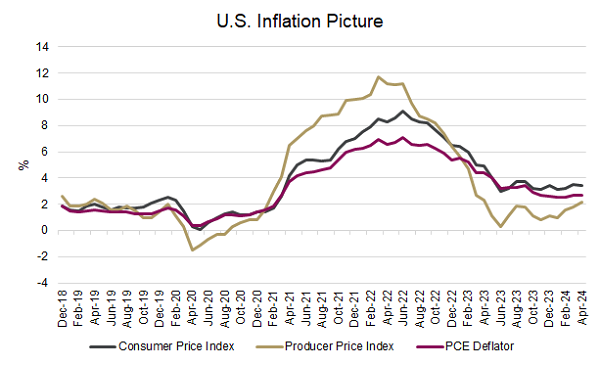 |
|
Quote of the day
 | We do not remember days, we remember moments.
Cesare Pavese |  |
|
|
Contributors: A. Innis, A. Nguyen, P. Kwon
|
|
|
Charts are sourced to Bloomberg unless otherwise noted.
The opinions expressed in this report are the opinions of the author and readers should not assume they reflect the opinions or recommendations of Richardson Wealth Limited or its affiliates. Assumptions, opinions and estimates constitute the author's judgment as of the date of this material and are subject to change without notice. We do not warrant the completeness or accuracy of this material, and it should not be relied upon as such. Before acting on any recommendation, you should consider whether it is suitable for your particular circumstances and, if necessary, seek professional advice. Past performance is not indicative of future results. Richardson Wealth Limited, Member Canadian Investor Protection Fund. Richardson Wealth is a trademark of James Richardson & Sons, Limited used under license.
|
|
| Address: 100 Queens Quay East, Suite 2500 Toronto ON M5E 1Y3 Canada
|
|
|
|
|