Today
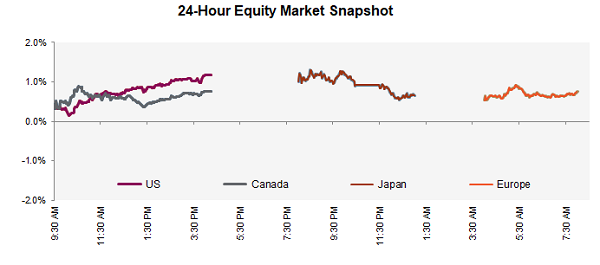
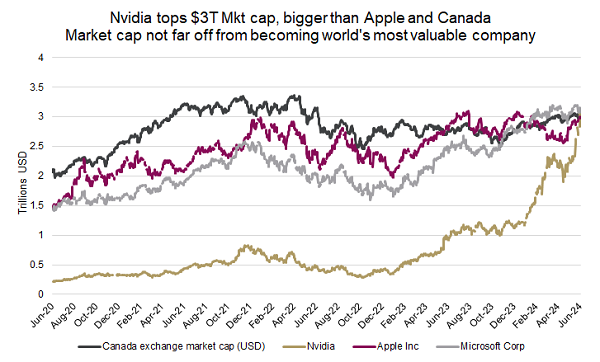
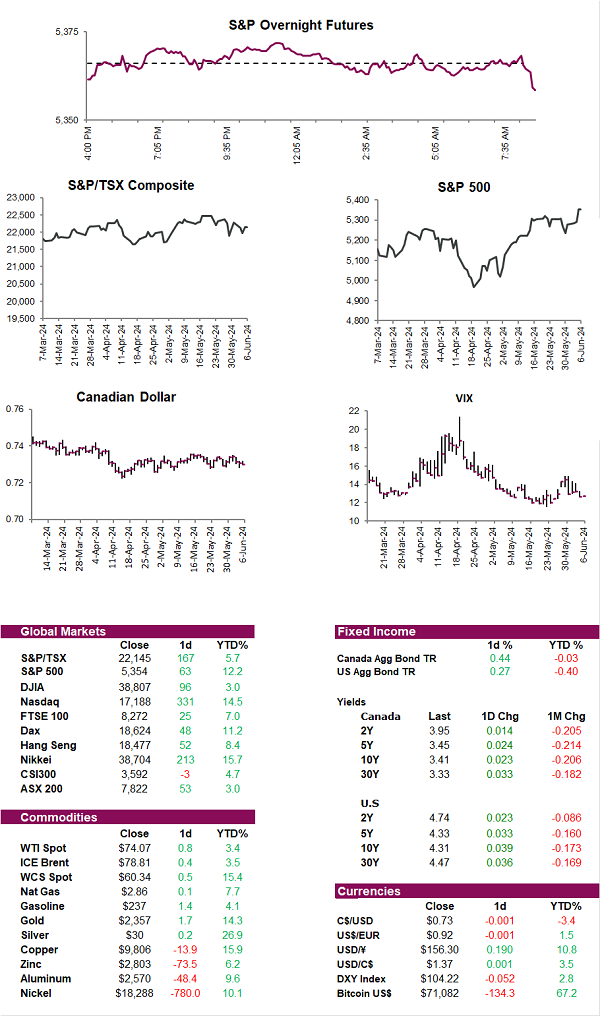
Stock futures are little changed this morning after the S&P 500 and Nasdaq notched new record highs thanks to a rally in Nvidia. Investors have turned their attention to the ECB this morning, who cut rates for the first time since 2019, putting a bit more pressure on the Fed to do the same. The euro rose after the ECB cut interest rates as expected and raised its inflation forecast. European stocks maintained their gains, and money markets are betting on another rate cut in September. ECB President Christine Lagarde announced a quarter-point cut in the key deposit rate to 3.75%, citing a noticeably improved inflation outlook despite higher price projections. Although it is doubtful that the Fed will make any moves when they meet next week, bets are rising that that they will cut in September. Markets are also parsing the latest U.S. jobs data that came out this morning while looking ahead to tomorrow’s nonfarm payrolls report for May.
The Bank of Canada cut its benchmark interest rate by 25 bps to 4.75%, becoming the first G-7 central bank to initiate an easing cycle. Governor Tiff Macklem indicated further cuts are likely if inflation shows further signs of slowing. After an aggressive interest rate hike campaign that began in 2022, the decision reflects the BoC’s belief in a soft landing for the economy, despite challenges including high wage growth and global tensions. The central bank aims to support the consumer amid impending mortgage renewals, despite the potential risks of reaccelerating inflation and rising home prices. Despite a disinflationary environment, concerns remain about underlying pricing pressures, given volatile hiring trends and potential Canadian dollar weakness. The BoC's move, while meeting market expectations, has some warning it may be counterproductive and revive inflation through higher home prices and consumer sentiment. The next two inflation reports will be crucial in determining the pace of future rate cuts. The cut has already impacted markets, with bond yields falling and the Canadian dollar depreciating.
In May, the U.S. services sector experienced its strongest growth in nine months, with the ISM's composite gauge rising 4.4 points to 53.8, driven by significant increases in business activity and orders, specifically in real estate and healthcare. Despite this growth, challenges in employment and inflation persist. In contrast, the manufacturing sector declined in May for the second straight month. The data showed orders with service providers grew faster, indicating resilient demand and contributing to ongoing inflationary pressures, with the Fed carefully monitoring these developments as they consider interest rate adjustments. The overall economy expanded at a modest 1.3% annualized rate in the first quarter.
Labour costs in the U.S. in Q1 rose less than previously reported due to downward revisions in economic output and hours worked. Unit labour costs, which measure the cost of labour per unit of output, increased at a 4% annual rate, revised down from 4.7%. The Fed prefers lower unit labour costs achieved through higher productivity, which can result from efficiency or technological improvements. However, the recent report indicated that labour costs rose more slowly because of decreased output, and real hourly compensation was also revised lower. Productivity saw a minimal increase of 0.2%. Additionally, initial unemployment benefit applications rose by 8,000 to 229,000, a figure susceptible to fluctuations around holidays such as Memorial Day. With this data out of the way, markets will look ahead to tomorrow’s NFP report for more clues on the health of the U.S. labour market.
Beginning in September, Canada will impose a 5% tax on foreign online streaming services which will generate at least $25 million in revenue, with aims to raise $200 million annually to support local broadcasting, including French-language and Indigenous content. This decision, announced by the Canadian Radio-Television and Telecommunications Commission, has unsurprisingly been met with strong opposition from U.S. business groups. Critics, such as the National Foreign Trade Council and the Information Technology Industry Council, argue that the tax unfairly targets U.S. companies like Netflix, Amazon Prime Video, and Disney+, potentially harming U.S.-Canada economic relations and stifling Canada’s policy goals and regional collaboration.
Japan's birth rate dropped to a record low for the eighth consecutive year in 2023, with 727,277 births and a fertility rate of 1.2. This decline highlights Japan's demographic challenges, characterized by an aging and shrinking population, which poses economic and national security challenges, especially given China's growing regional influence. Officials described the situation as critical, urging immediate action within the next six years to reverse the trend. Despite new government measures, including substantial financial support for childrearing and expanded parental leave, experts argue these efforts fall short, failing to address the underlying issues of economic instability, gender-biased workplace culture, and the reluctance of young people to marry or have children. Japan's population, currently over 125 million, is projected to decrease by 30% by 2070.
The demand for natural diamonds has been declining, driven by the rise of lab-grown diamonds, changing consumer preferences, and economic factors. De Beers, historically a dominant player in the diamond industry, is seeing its market share diminish and prices drop. Anglo American, De Beers' largest shareholder, is planning to divest the company as it shifts focus to commodities supporting green infrastructure. The diamond industry's struggles are exacerbated by lower marriage rates in China, the popularity of gold and lab-grown gems, and a shift in consumer spending towards travel. Lab-grown diamonds, significantly cheaper than natural ones, now constitute a substantial share of the market, further driving down prices.
Diversion: How many dads does it take?