Today
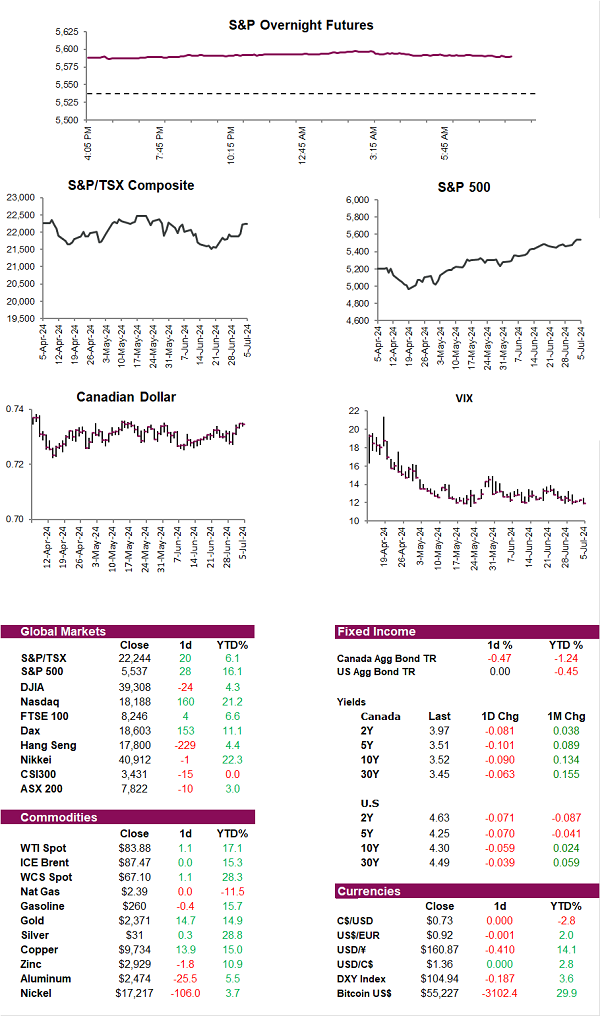
Futures are ticking higher and yields are lower following jobs data which showed that labour markets are cooling in North America. Hiring in the U.S. slowed in June, with nonfarm payrolls increasing by 206,000, and the unemployment rate rising to 4.1% as more people joined the labour force. The Bureau of Labor Statistics also revised job growth figures for the previous two months down by 111,000. Despite the slowdown, the increase exceeded economists' median forecast of 190,000. Average hourly earnings also cooled, indicating a gradual easing in the labour market. This trend, coupled with a recent moderation in inflation, supports expectations that the Fed will begin cutting interest rates, possibly as early as September.
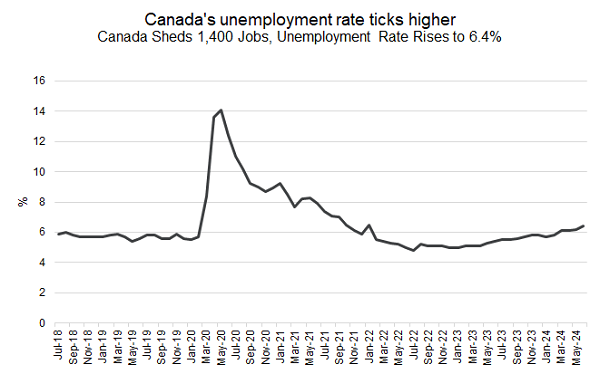
Canada's labour market saw an unexpected decline in June, shedding 1,400 jobs and raising the unemployment rate to 6.4%, contrary to economists' predictions of a 25,000 job gain and a jobless rate of 6.3%. This marks the second job loss in four months, signaling a loosening labour market that could prompt the BoC to further reduce rates. Despite wage growth for permanent employees accelerating to 5.6%, the softer job market favours a potential rate cut. With the next rate decision on July 24 and a likely hold on rates, economists anticipate further easing by September. June saw a 0.4% decline in total hours worked, and a 0.1% drop in the participation rate to 65.3%. Job losses were significant in transportation, warehousing, information, recreation, and trade sectors, with Quebec losing 18,000 jobs and Ontario experiencing a 0.3% rise in the jobless rate to 7%.
Keir Starmer has led the Labour Party to a landslide victory in the UK parliamentary election, ending 14 years of Conservative rule. Labour won 410 seats, while the Conservatives, led by Rishi Sunak, suffered their worst defeat in history, losing about 250 seats. Sunak has resigned as party leader following the defeat. The Scottish National Party also saw significant losses, while the right-wing Reform UK party gained over four million votes, impacting the overall result. Despite Labour's win, polls suggest limited enthusiasm for Starmer, who now faces significant economic and social challenges, including public service issues and high taxation levels. Starmer has vowed to improve relations with the EU, maintain support for Ukraine, and tackle domestic issues like asylum seeker policies and the cost of living crisis.
The federal government has enacted a digital-services tax on large foreign tech companies, effective June 28, despite U.S. threats of trade retaliation. The 3% tax applies to digital services revenue from Canadian users exceeding $20 million annually and targets companies with worldwide revenue above $1.1 billion, impacting firms like Alphabet and Meta. Canada’s parliamentary budget officer estimates the tax will generate about $7.2 billion over five years. The move follows similar taxes in countries like the UK and France, but Canadian business groups warn it could harm U.S.-Canada trade relations. Finance Minister Chrystia Freeland stated the tax would not be enacted if a global tax treaty is ratified, which has not yet occurred.
The debate over whether President Joe Biden will drop out of the 2024 presidential race is causing significant market adjustments, with traders shifting investments in response to potential implications of a Donald Trump re-election. Following a challenging debate for Biden, there have been notable increases in Treasury yields and a shift towards the dollar and short-term debt as hedges. Analysts believe a Trump victory could lead to inflationary policies, higher U.S. bond yields, and gains in banking, healthcare, and energy stocks, while globally, markets brace for impacts on U.S.-China relations and tariffs. Additionally, Trump’s support for the crypto industry have some speculating that a re-elected Trump might appoint a more crypto-friendly SEC chair.
Preliminary reports show that June light vehicle sales were relatively weak, with an estimated 169,000 units sold, matching June 2023 figures but still significantly below pre-pandemic levels, which exceeded 200,000 units. The drop in sales was partly due to widespread software outages caused by cybersecurity attacks on CDK Global, a software provider for auto dealers. Despite these challenges, declining interest rates and incentives helped stabilize sales, with experts anticipating a rebound in July as delayed sales from the software outage recover.
Global growth showed signs of stabilization in June, with the JPM Global Manufacturing PMI at 50.9, nearly matching May's 22-month high. However, international trade flows weakened, as indicated by the contraction in new export orders and a dip in future output expectations to an eight-month low. Input costs and selling prices rose at their highest rates in over a year. Japan’s exports have been bolstered by a weak yen despite declining volumes, while Singapore's electronics exports remain strong, though non-oil exports to China and the U.S. are falling. Overall, global growth indicators suggest no clear upward trend, with experts saying that positive momentum could persist in the short-term but may be unsustainable if a recession in the U.S. would to occur.
Bitcoin is down for a fourth straight trading session on concerns about potential selling by governments, creditors of a failed exchange and troubled crypto miners. Cryptocurrencies fell broadly despite equity markets advancing, highlighting the array of challenges facing the industry. Bitcoin is now down about 25% from its March record, as the hype around US ETFs investing directly in the token have been pushed aside by fears of higher-for-longer interest rates and political uncertainty. On top of that, administrators of the failed Mt. Gox exchange are returning an $8 billion hoard of Bitcoin to creditors in stages. Uncertainty about how much of that will eventually get sold has weighted on markets. There are also signs that German authorities are preparing to sell some of the 50,000 Bitcoin they seized earlier from online criminals.
With summer now here, many kids will be heading off to camp. If you happen to have a child that isn’t too excited about going to camp, tell them it could be worse. This summer, Russian children will be sent to a summer camp in North Korea, with the first group expected to arrive in late July. And while the idea of being in a “camp” in North Korea doesn’t make us think of campfires and canoeing, Grigory Gurov, head of the Russian youth movement "Movement of the First," stated that there is anticipated high demand for these spots due to the "excellent" conditions at the camp. Additionally, officials announced that Russian tourists can now vacation on North Korean beaches, with summer tour packages already finalized. This plan comes after a comprehensive strategic partnership agreement was signed last month between Vladimir Putin and Kim Jong Un, which includes mutual assistance in case of aggression (and apparently having their kids play together).
Diversion: Okay, now you’re just showing off.