Today
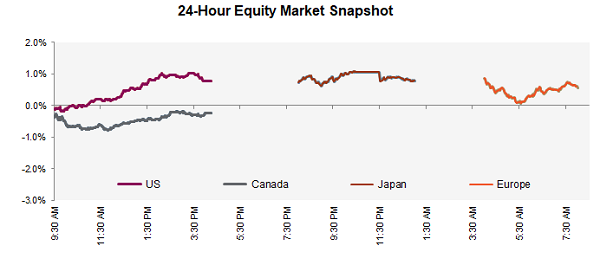
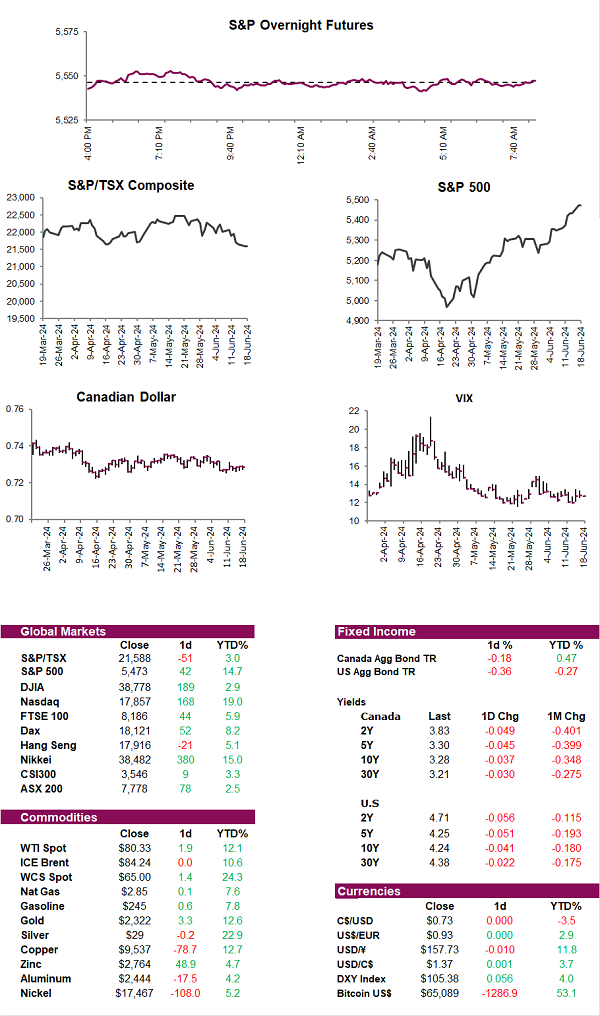
Treasury yields are falling and equity futures are mixed after U.S. retail sales for May came in weaker than expected. Retail sales saw a modest increase of 0.1% in May, with prior months' figures revised downwards, indicating growing financial pressure on consumers. Excluding gasoline, sales rose by 0.3%. Five of the 13 retail categories tracked showed declines, partly due to lower gasoline prices and discounts at furniture outlets. These figures reflect a slowdown in consumer spending compared to earlier in the year, as persistent inflation, a cooling job market, and financial stress take their toll. Economists anticipate a moderate pace of spending ahead. Meanwhile, softer-than-expected consumer and producer prices in May support the Fed's potential decision to lower interest rates sooner than they have been leading on.
The higher for longer warnings from the fed haven’t paused investors’ appetite for riskier assets, particularly tech stocks, which saw $2.1 billion in inflows last week. Despite the Fed’s forecasts and hawkish comments from Powell, who indicated limited rate cuts this year, the S&P 500 has seen impressive gains, rising above 5,400 points and now up over 50% since October 2022. Markets have largely ignored the warnings and instead looked at economic data which has shown inflation moderating and are now betting on lower borrowing costs and strong economic growth. With sentiment changing, markets have seen large inflows not only into tech stocks, but also other rate-sensitive sectors, such as utilities and real estate as they anticipate future dovish shifts from the Fed.
Still on the sidelines. Canada's housing market declined in May with a 0.6% drop in sales and a 0.2% decrease in the benchmark house price to $714,300, down 2.4% from the previous year. The slowdown, which came just before the Bank of Canada cut its key interest rate, may stimulate market activity, though the extent and speed of further cuts are uncertain. The number of newly listed properties rose 0.5%, offering more options for buyers as the market adjusts to the new interest rate environment. Meanwhile, the annual pace of housing starts increased by 10% to 264,506 units in April, according to the Canada Mortgage and Housing Corporation. The growth was driven by significant gains in multi-unit starts in Montreal and Toronto, which rose 104% and 47%, respectively, although Vancouver saw a 32% decline. This comes as the federal government introduces new tax incentives and spending to address housing affordability. The overall annual pace of urban housing starts rose 11% to 246,111 units, with multi-unit starts up 13% and single-detached starts up 2%.
The debate over the rise of private credit is intensifying on Wall Street. Industry heavyweights, including Jamie Dimon, are warning that higher lending by private equity firms and hedge funds could allow unmonitored risks into the banking system. Still, others argue that private credit makes the financial system safer by avoiding short-term funding issues that plague traditional banks. The global private credit market has surged to $1.67 trillion, driven by large institutional investors like pension funds and insurance companies. Despite concerns about potential systemic risks and regulatory scrutiny, private credit performance has remained strong, often outpacing traditional banks and private equity in returns. The dynamic between traditional banks and private lenders remains complex, with banks both competing against and financing these private funds.
We all knew it was coming, but seeing the numbers still hurt. According to Bank of Canada research, rising debt payments are projected to reduce the average disposable income of households with mortgages by up to 5% by 2027. Since 2022, mortgage payments have already led to a 3% decline in disposable income for these households as of April this year, cutting their consumption by 2.8%, with expectations to reach a 3.8% reduction by early 2028. Researchers note, however, that the impact on consumption varies based on households' liquid savings. The increased debt burden from rate hikes will have prolonged negative effects on mortgage borrowers' consumption, with mortgage payments peaking at an average increase of 17% around 2027 as most mortgages will have been renewed by then.
A recent study by the Fed Bank of San Francisco found that that privately-held companies have significantly outperformed publicly traded firms in terms of profitability over the past four decades. Starting in the late 1970s, private company returns began to rise, surpassing public company returns by more than 50%, with a notable 10% gap beginning after 2000. This trend is attributed to private firms' ability to raise prices and profits due to less competition and regulatory burden, and their capacity for riskier investments without the pressure of shareholder oversight. The study highlights that private firms may have a higher cost of capital but are able to achieve greater returns on investment compared to their public counterparts. With that in mind, some are cautioning against using stock market performance as a proxy for the overall economy, emphasizing that interest rates in financial markets reflect the financing costs of publicly traded companies only.
Dividend recapitalizations have surged in 2024, reaching $30.2 billion in leveraged loans to provide payouts to private equity investors, matching a record from 2021. This approach, where companies take on debt to pay dividends to investors, has become more common due to a lack of exit opportunities via mergers, acquisitions, or IPOs. While debt investors are eager to buy credit products, this strategy raises leverage, potentially straining companies in economic downturns. Despite the inherent risks, the demand for these loans remains high, with firms like Blackstone and others engaging in significant recap deals. Private equity sponsors find this method appealing as they wait for more favourable market conditions to sell assets. However, the strategy faces criticism for potentially prioritizing investor returns over sustainable company growth, with some suggesting it could negatively impact the broader economic ecosystem, including pension funds and endowments.
The recent European Parliament elections saw far-right parties winning the largest share of votes in France and Italy, and coming second in Germany, signaling a growing discontent with centrist leadership. Even though centrist parties still control the EU's legislative agenda, these results have sparked action beginning with French President Emmanuel Macron's risky decision to dissolve his own legislature following the elections. Experts note the political shift suggests a need for the EU to reform its governance, focusing on delivering more tangible benefits to citizens. Among the issues for voters includes addressing voters' concerns on immigration, economic stagnation, and climate policies, all of which will be crucial to rebuilding trust and to avoid further political instability.
Just his luck. A man from Ontario is faced challenges claiming his lottery prize of $1,186 after forgetting where he purchased the winning Lotto 6/49 ticket in April 2023. Despite submitting a claim to the Ontario Lottery and Gaming Corporation in October, the man encountered delays in receiving his winnings, all because he couldn’t seem to recall the purchase location. OLG emphasized verifying ticket ownership before disbursing prizes over $1,000, noting discrepancies in information can lead to extended reviews. OLG decided to fold and send him his cheque, but only after the media picked up his story. In any case, if you happen to win big, please remember where you bought your ticket.
Diversion: How do you even practice this?