Daily market commentary
The Launch Pad |
|
|
|
 |
| | |
|
Today
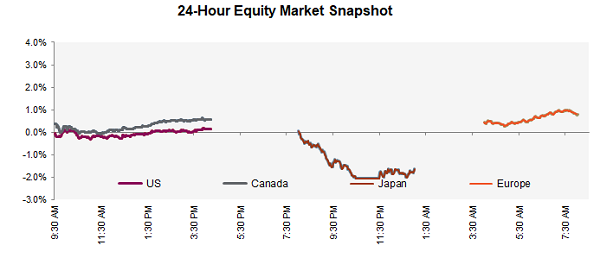
Stocks are pointing up this morning, following a surprise increase in retail sales which boosted confidence in the U.S. economy ahead of Fed’s next rate decision. Retail sales in the U.S. unexpectedly rose by 0.1% in August, signaling strong consumer demand. The increase was driven primarily by strong online shopping activity. This uptick followed a revised 1.1% gain in July, defying expectations of a 0.2% decline. Excluding autos and gasoline, sales increased for the fourth consecutive month, reflecting continued spending strength. Not to get too technical, but the data highlighted that the “control group” sales, which are used to calculate GDP, rose by 0.3%, matching expectations.
Inflation in Canada hit the BoC’s 2% target for the first time since February 2021, with the consumer price index rising 2% in August, down from 2.5% the previous month. Core inflation also eased to 2.35%. This decrease, driven by falling gasoline prices, opens the door for potential larger interest rate cuts by the central bank. The Bank of Canada has already reduced rates three times since June, bringing the overnight rate to 4.25%. August’s inflation data reinforces confidence that inflation is under control, ahead of the next rate decision in October.
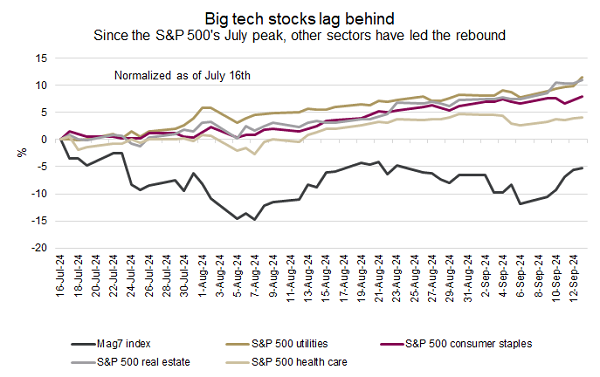
Investors are preparing for the Fed’s upcoming rate decision, leading to a shift away from tech megacaps like Apple and Nvidia that have driven much of the recent bull market. As speculation grows that the Fed will cut rates by 25 or 50 bps, money has flowed into more economically sensitive sectors, while big tech stocks have declined. While the S&P 500 remains steady, its equal-weighted version hit an all-time high yesterday, showing a broader market rally.
The federal government announced changes to mortgage rules aimed at addressing the country's housing affordability crisis. The cap on insured mortgages has been raised from $1 million to $1.5 million, allowing more buyers to qualify with a minimum 5% down payment. Additionally, loans with 30-year amortization periods will now be available to first-time buyers or those purchasing newly built homes. These measures are designed to boost housing construction and ease the shortage, as rising housing costs and rents have severely impacted Canadians. This comes as the Liberal government faces backlash due to the housing crisis.
Economists are predicting that Canadian households are likely to allocate a record proportion of their disposable income to debt payments in the coming months due to mortgage renewals at higher rates and slowing wage growth. The debt service ratio reached 14.97% in Q2 2024, approaching its record high of 15.03% from Q1 2019. While mortgage renewals are driving debt pressures, the household savings rate increased to 7.2%, indicating financial caution in anticipation of higher payments. Despite rising financial stress, Canadian household net worth hit a record $17.01 trillion, with wealth highly concentrated among the wealthiest 20%.
The Surgeon General has issued a public health warning, and you may (or may not) be surprised. The warning highlights the increasing stress faced by parents, labeling it an "urgent public health issue." The report reveals that many parents, especially those with young children, are overwhelmed, with two-fifths unable to function due to stress and three-fifths struggling to focus. Key stressors include rising childcare costs, work demands, and concerns over their children’s mental health. Technology and the ongoing youth mental-health crisis also contribute to stress. Policymakers are urged to help by expanding programs, establishing paid family leave, and improving access to affordable childcare and mental health services.
Diversion: Who did it better?
|
|
|
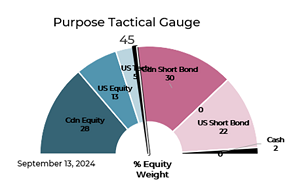
(% equity weight)
Our tactical fund is designed to complement your existing holdings to minimize portfolio volatility. To learn more, please click here.
|
|
|
| |
|
|
Company news
Amazon is shifting its policy to require corporate employees to work in the office five days a week starting in January 2024, moving away from its previous hybrid model. CEO Andy Jassy emphasized that exceptions will only be made for special cases. Alongside this, Amazon is restructuring its corporate hierarchy by reducing managerial layers and increasing the ratio of individual contributors to managers by 15% by early 2025 to enhance efficiency. These changes are part of a broader effort to maintain agility and strengthen corporate culture, following significant pandemic-era expansion and subsequent cost-cutting measures, including layoffs.
Microsoft announced a quarterly dividend raise of 10% and unveiled a new $60 billion stock-buyback program, matching the size of a repurchase plan three years ago. The share repurchase agreement, which has no expiration date, replaces a buyback program announced in 2021 that was also $60 billion. While the figures are sizable in absolute terms, the buyback agreement represents less than 2% of Microsoft’s market value.
Intel announced significant restructuring changes in its chipmaking business, including separating its foundry business into an independent entity and pausing its fabrication efforts in Germany and Poland. The foundry business, which encompasses Intel’s semiconductor manufacturing capability, will become an entity with its own board and the potential to raise outside capital. Despite roughly $50 billion of investment over the past two years, the foundry business has had little success amid fierce competition overseas. Moreover, the company’s decision to postpone its planned factory in Germany marks a setback for the EU’s semiconductor ambitions and will reignite controversy in Berlin over where to allocate €10 billion ($11 billion) in earmarked subsidies. The troubled US chipmaker’s move to delay the project in Magdeburg by about two years is a blow to the EU’s goal of producing one-fifth of the world’s semiconductors by 2030. The German facility was on track to be the biggest plant supported under the EU’s Chips Act that was passed last year.
|
|
|
|
Commodities
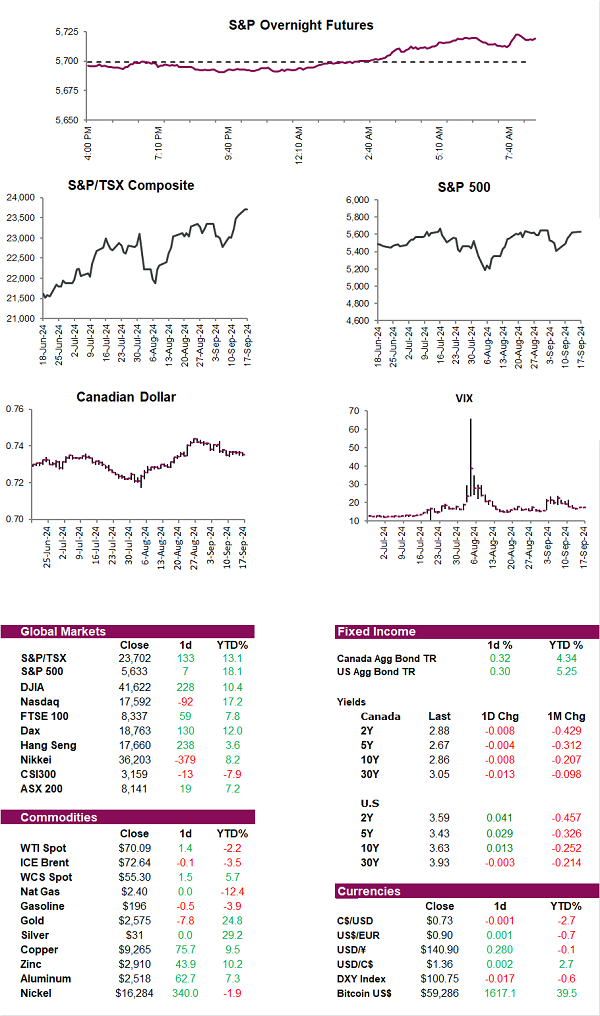
Oil prices are little changed as global markets sit on their hands and await a widely expected interest-rate cut by the Federal Reserve on Wednesday. Opinion remains divided on the Fed’s easing path, but some are wagering it will start with a half-point cut. Lower rates would likely provide bullish tailwinds for energy demand. Benchmark crude prices have been under pressure losing around 15% this quarter on China’s economic slowdown and signs of plentiful supply. In Europe, major oil refineries are cutting how much crude they process at their plants, adding to bearish headwinds. The region is also facing competition from a new mega refinery in Nigeria, that’s in the process of firing up.
Soybeans are steady after a two-day decline as traders weighed the outlook for robust US supply as the nation’s harvest builds. Crops are in a better condition than a year ago, with the harvest ahead of the seasonal average, according to a report from the USDA. The new crop will have record yields and the crush is expected to surprise to the upside in coming months, Morgan Stanley said in a note. There are concerns that global supply could exceed demand as China — the world’s biggest importer of soybeans — slows purchases of US supplies after buying large volumes of cheap Brazilian beans earlier this year. 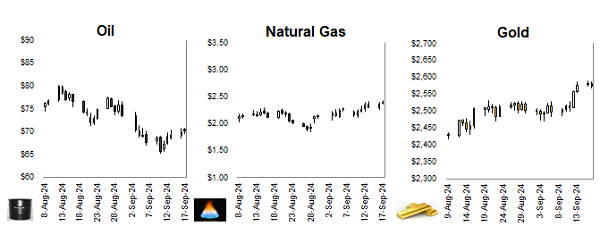 |
|
|
|
Fixed income and economics
Canada's yield curve has briefly disinverted, with the two-year bond yield dropping below the 10-year yield for the first time in over two years, signaling expectations of upcoming rate cuts by both the Fed and the BoC. Canada's two-year yield fell to 2.862%, reflecting shifting market sentiment that aggressive monetary tightening has largely mitigated inflation pressures. Bank of Canada Governor Tiff Macklem hinted that faster rate cuts might be necessary to manage economic slack and meet inflation targets.
In July, Canadian manufacturing sales increased by 1.4% to $71 billion, rebounding from a 1.7% decline in June, according to Stats Canada. The rise was driven by a 6.7% increase in petroleum and coal product sales, totaling $8.6 billion, and a 5.3% boost in chemical product sales, reaching $5.6 billion, particularly in pharmaceuticals. However, wood product sales dropped by 4.8% to $2.9 billion, their lowest level since May 2023. In constant dollar terms, manufacturing sales rose by 0.9% for the month.
|
|
|
|
Quote of the day
 |
Action indeed is the sole medium of expression for ethics.
Jane Addams
|  |
|
|
Contributors: A. Innis, A. Nguyen, P. Kwon
|
|
|
Charts are sourced to Bloomberg unless otherwise noted.
The opinions expressed in this report are the opinions of the author and readers should not assume they reflect the opinions or recommendations of Richardson Wealth Limited or its affiliates. Assumptions, opinions and estimates constitute the author's judgment as of the date of this material and are subject to change without notice. We do not warrant the completeness or accuracy of this material, and it should not be relied upon as such. Before acting on any recommendation, you should consider whether it is suitable for your particular circumstances and, if necessary, seek professional advice. Past performance is not indicative of future results. Richardson Wealth Limited, Member Canadian Investor Protection Fund. Richardson Wealth is a trademark of James Richardson & Sons, Limited used under license.
|
|
| Address: 100 Queens Quay East, Suite 2500 Toronto ON M5E 1Y3 Canada
|
|
|
|
|